
contact us
- 59# zhongguancun st., haidian dist., beijing 100872, p.r.china
- [email protected]
- 010-82509716
research
-
the relationship between child maltreatment and social anxiety: a meta-analysis liu, j., deng, j., zhang, h., & tang, x. (2023). the relationship between child maltreatment and social anxiety: a meta-analysis. journal of affective disorders, 329, 157–167. https://doi.org/10.1016/j.jad.2023.02.081 read more >
-
continuous error timing in automation: the peak-end effect on human-automation trust wang, k., lu, j., ruan, s., & qi, y. (2023). continuous error timing in automation: the peak-end effect on human-automation trust. international journal of human–computer interaction, 40(8), 1832–1844. https://doi.org/10.1080/10447318.2023.2223954 read more >
-
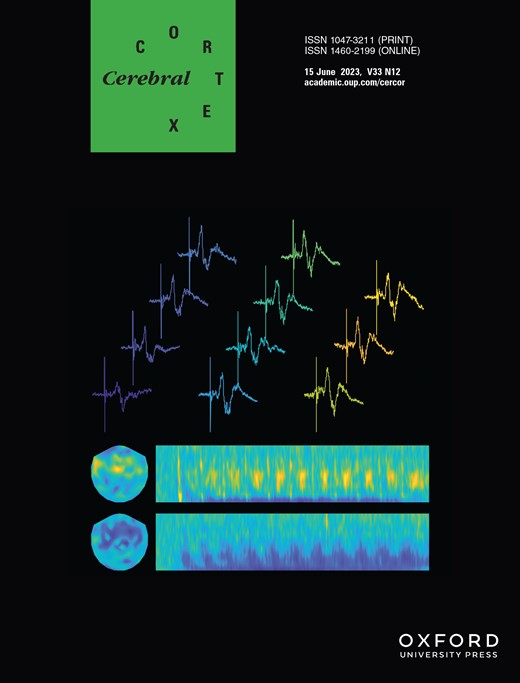
the impact of social distance on the processing of social evaluation: evidence from brain potentials and neural oscillations hu, x., zhang, y., & mai, x. (2023). the impact of social distance on the processing of social evaluation: evidence from brain potentials and neural oscillations. cerebral cortex (new york, n.y. : 1991), 33(12), 7659–7669. https://doi.org/10.1093/cercor/bhad069 read more >
-
individuals’ differences in self-assessment: the relationship between subjective and objective financial literacy xin, z., xiao, b., wang, l., et al. (2024). individuals’ differences in self-assessment: the relationship between subjective and objective financial literacy. metacognition and learning, 19(2), 365–379. https://doi.org/10.1007/s11409-024-09375-0 read more >
-

sensorimotor adaptation to formant-shifted auditory feedback is predicted by language-specific factors in l1 and l2 speech production cai, x., ouyang, m., yin, y., & zhang, q*. (2024). sensorimotor adaptation to formant-shifted auditory feedback is predicted by language-specific factors in l1 and l2 speech production. language and speech, 67(3), 846–869. https://doi.org/10.1177/00238309231202503 read more >